
Last updated November 4, 2026
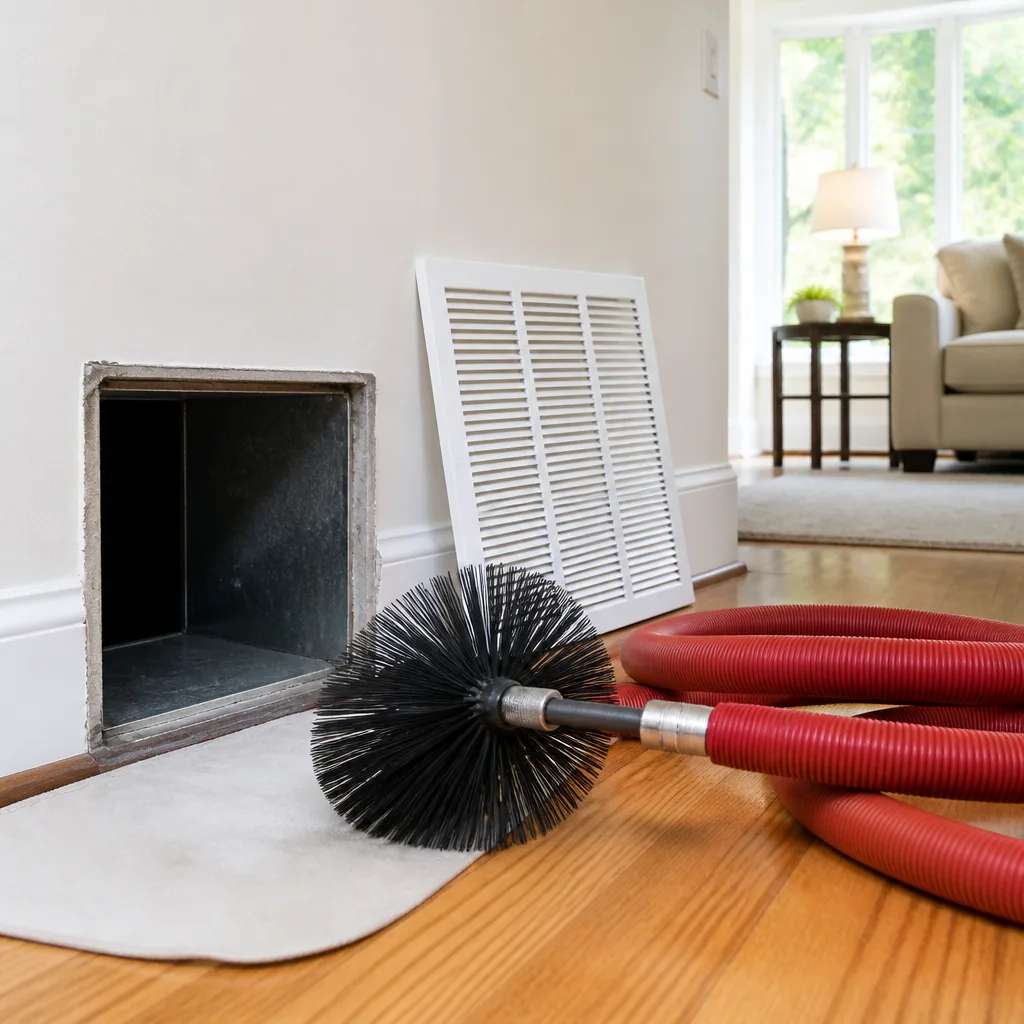 Whole-home duct cleaning
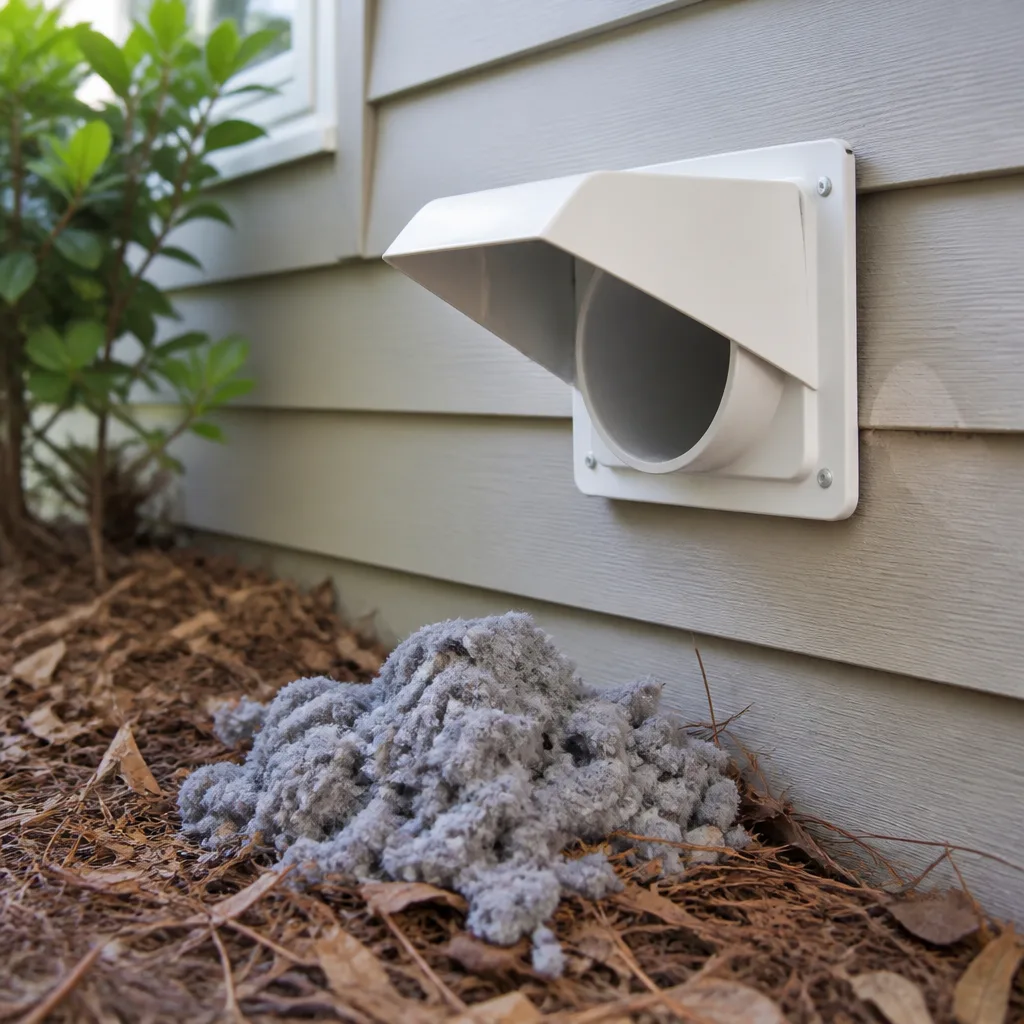 Dryer vent cleaning
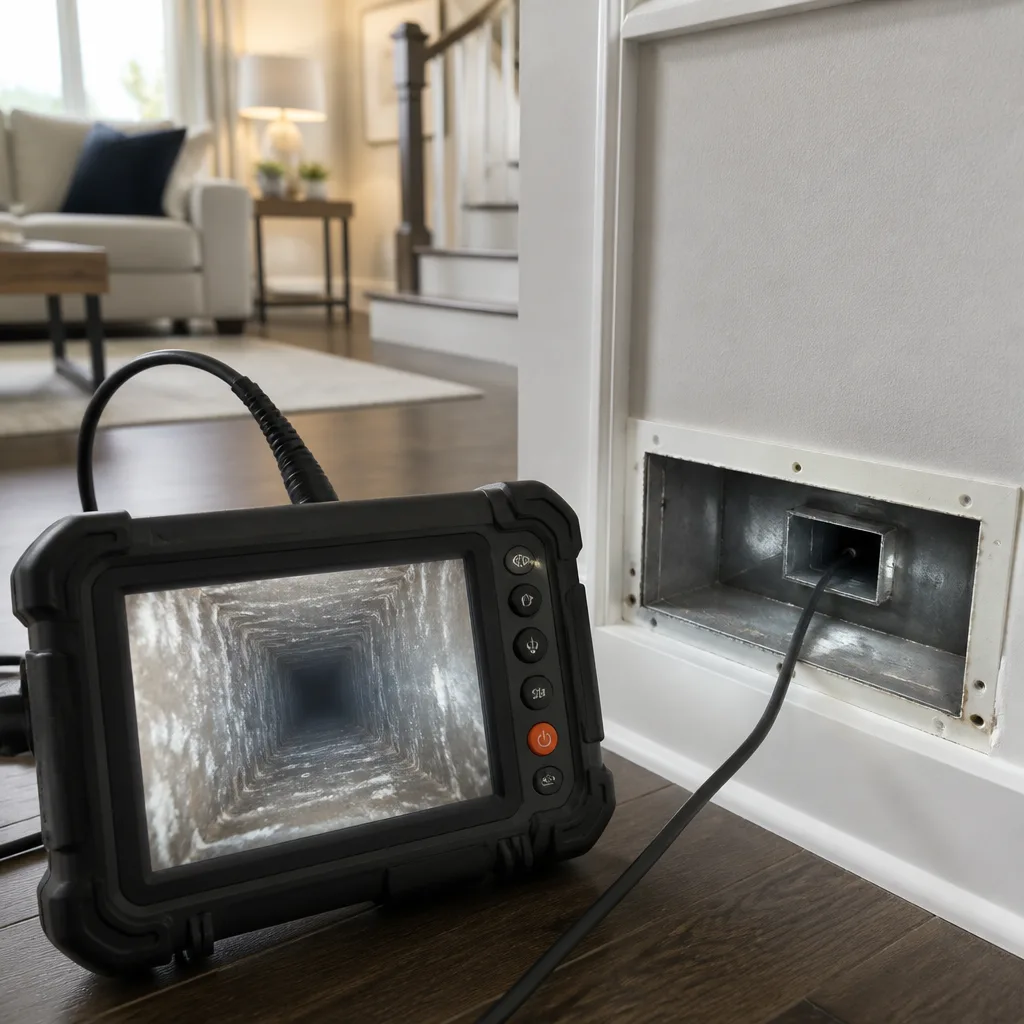 Camera inspection
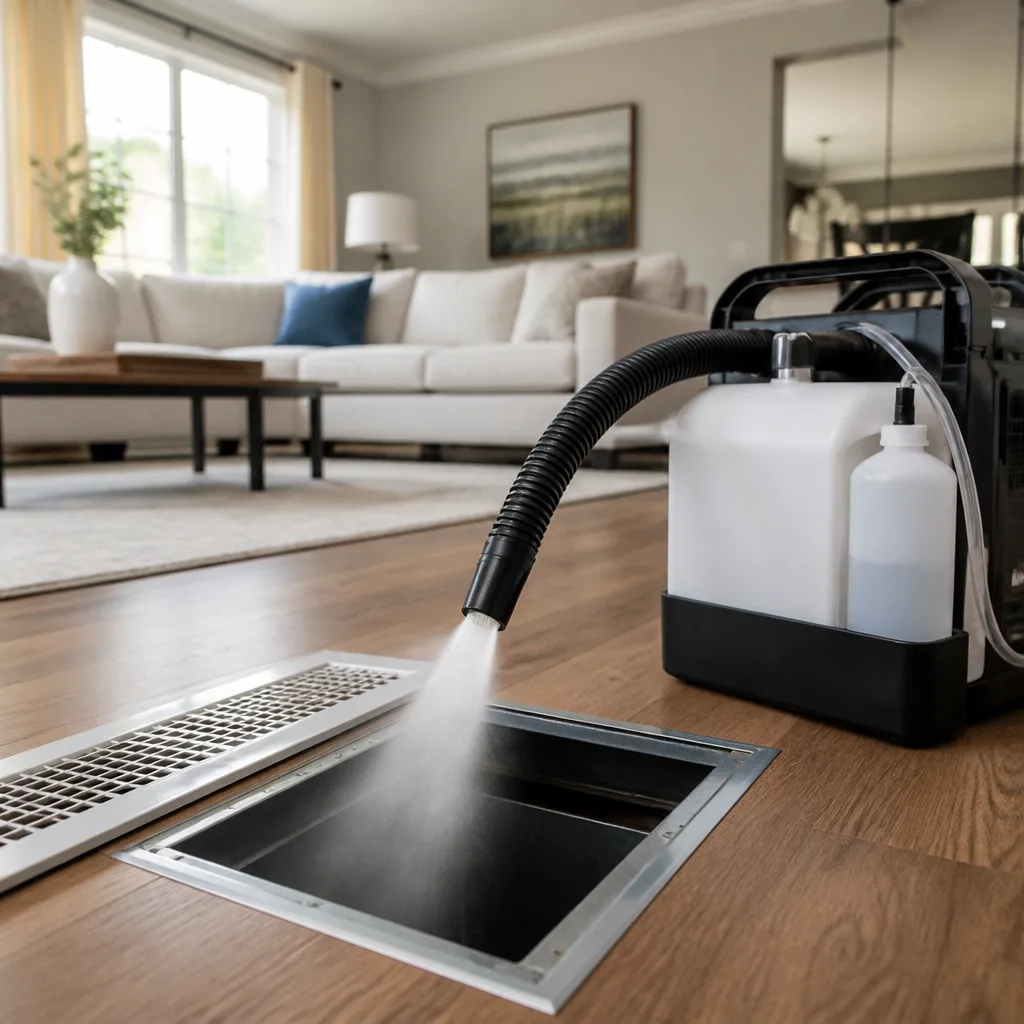 Sanitizing & deodorizing
Whole-system duct and dryer vent check with before-and-after photos - you see exactly what came out of your vents
That "$99 whole-house special" is a bait ad - the real number appears once they are in your hallway, or the "clean" is a shop-vac at the register. We photograph the inside of your ducts before and after instead.
Air Duct Cleaning Maintenance Schedule: What to Do and When
Changing your filter every 90 days is the bare minimum. But if you skip the annual return-plenum inspection, you can have a spotless filter and still be circulating debris from a cracked duct lining that has been shedding fiberglass into the airstream for two seasons. Most maintenance guides treat duct cleaning as a single event on a five-year timer. That is the wrong frame. A real schedule is a layered calendar: monthly filter discipline, quarterly register checks, an annual inspection of the return side and plenum, and a full extraction cleaning every three to five years, with the clock resetting whenever a major modifier event occurs. If you live in Castro Valley, where HVAC systems pull from both coastal fog patterns and hot inland stretches, that schedule matters more than the average homeowner assumes. This guide lays out the full calendar, the material-specific intervals, and the inspection points most people never think to check.
Styles & brands we work with
- Whole-home duct cleaning
- Dryer vent cleaning
- Camera inspection
- Sanitizing & deodorizing
Quick Answer
A practical air duct maintenance schedule has four tiers: check and replace the filter monthly, wipe down registers and visually inspect accessible ductwork quarterly, have a full return-side and plenum inspection annually, and schedule a professional extraction cleaning every three to five years. The exact cleaning interval depends on your duct material, household composition, and whether any modifier events like renovation, water intrusion, or rodent activity have occurred. Dryer vent cleaning runs on a separate, stricter timeline because it is a fire-safety item, not an air-quality preference.
Table of Contents
- Monthly Filter Discipline: The Tier Nobody Argues With
- Quarterly Register Wipe and Visual Check: What You Can See Without a Camera
- Annual Return-Side Inspection: The Checkpoint Most Homeowners Skip
- Full Extraction Cleaning: Why Every 3 to 5 Years Changes by Material
- Modifier Events: What Resets the Clock Immediately
- Dryer Vent Cleaning Schedule: A Different Urgency Tier
- Duct Material Intervals: Sheet Metal vs. Flex vs. Fiberglass Board
- Common Mistakes to Avoid
- When to Call a Professional
- Frequently Asked Questions
- The Bottom Line
Monthly Filter Discipline: The Tier Nobody Argues With
Every maintenance schedule starts at the filter because the filter is the first line of defense for everything downstream. A clogged filter forces the blower to work harder, which raises static pressure, which stresses the entire duct system. In Castro Valley, where early summer brings dry heat and late summer brings wildfire smoke patterns that push particulate loads up, the filter is doing more work than the packaging suggests. A one-inch fiberglass panel rated for 90 days may be done at 45 days during a bad smoke season, and that means your ducts start accumulating debris faster.
The monthly check is not the same as a monthly replacement. In our experience, most households need a visual inspection once a month. Hold the filter up to a light. If you cannot see the light source through the media, it is saturated, regardless of how many days it has been in place. Write the installation date on the filter frame with a permanent marker. That small act gives you a real record to compare against, which is more useful than any calendar reminder. A Duct Cleaning Castro Valley technician can show you how to read filter condition during any service visit, but this monthly check belongs to the homeowner.
For households with pets, the interval shortens. Pet dander is smaller and stickier than household dust, and it bonds to filter media faster. If you have two or more shedding animals, plan on replacing a standard filter every 45 to 60 days. If someone in the home has a respiratory condition, consider stepping up to a higher MERV rating, but check with an HVAC professional first. Higher MERV means higher resistance, and some systems cannot handle the added pressure drop without modification. A Honeywell media cabinet or similar product can allow higher-efficiency filtration without choking the blower, but that is a system-level conversation, not a filter-swap.
Quarterly Register Wipe and Visual Check: What You Can See Without a Camera
Once a quarter, walk the house and remove every supply register and return grille. This is a ten-minute job that tells you more than you might expect. Wipe the register face with a damp cloth, then look into the duct opening. What you see at the first six inches is often a preview of what is further down the line. Gray, fluffy accumulation against the duct wall is normal to a degree. Dark, oily residue, visible mold staining, or debris that looks like insulation or drywall dust is not.
While the register is off, check the condition of the boot itself. The boot is the metal or plastic transition piece that connects the register to the duct run. On flex duct systems, this is where the inner liner often tears first, because the boot edge creates a friction point. If you see the inner plastic liner pulling away from the outer insulation jacket, you are looking at a repair issue, not a cleaning issue. This quarterly checkpoint is also the time to confirm that every register is actually open. Closed registers increase static pressure and push conditioned air through unintended leakage points. Some rooms should be conditioned differently than others, but closing registers to save energy is a myth we have seen cause more problems than it solves in Castro Valley homes.
This is also the moment to notice smells. A faint musty odor from one register, but not the others, points to a localized problem in that run. A smell that appears only when the system first starts and fades within minutes is often dust that has settled on the heat exchanger or coil burning off. That is a normal seasonal occurrence, especially after the first heating cycle of the fall. A smell that persists during operation is a different conversation and should trigger a service call.
Annual Return-Side Inspection: The Checkpoint Most Homeowners Skip
The return side of your duct system is the most neglected part of residential HVAC. Homeowners look at the supply registers because those are the vents that blow air into rooms. But the return side is the intake, and everything in the return airstream either gets filtered or gets blown through the coil and back into the living space. An annual return-side inspection is the single highest-value maintenance item on this entire schedule, and it is the one almost nobody does.
What does a real return-side inspection involve? The technician removes the return grilles and looks at the return plenum, the main return trunk, and the filter housing. They check for joint separation on the return duct runs. Return ducts are under negative pressure, which means they pull air in through every gap. If a return joint is separated in an attic or crawlspace, that duct is pulling unfiltered air directly from that space and injecting it past the filter. That is how fiberglass insulation particles end up in your supply air even when the filter is clean. A cracked duct lining on the return side sheds continuously, and because the return air moves fast, those particles travel far before settling. Annual inspection means finding that separation before it becomes a multi-season air quality problem.
The inspection should also include a static pressure reading. Static pressure is a measurement of resistance in the duct system, and it is the most objective number a technician can gather about duct condition. High static pressure means the blower is working against a restriction somewhere: a collapsed flex run, a filter that is too restrictive, a damper that has failed closed, or ductwork that is simply undersized for the system. This is the difference between looking at a duct with a flashlight and actually evaluating the system. A professional air duct cleaning should include this kind of system assessment, not just a visual pass. In Castro Valley, where many homes were built in the 1960s and 1970s, duct systems are often original to the house, and static pressure readings on those systems frequently reveal hidden restrictions that visual inspection alone would miss.
Full Extraction Cleaning: Why Every 3 to 5 Years Changes by Material
The most common question we hear is whether the NADCA-recommended interval of every three to five years actually applies to a specific house. The honest answer is that it depends on four things: duct material, household composition, system condition, and whether any modifier events have occurred. A sheet metal duct system in a two-adult household with no pets and a well-maintained high-efficiency filter may genuinely go five years between cleanings. A flex duct system in a three-pet household with a child who has allergies may benefit from cleaning every three years on the nose.
The process matters as much as the interval. A proper extraction cleaning uses rotary agitation to dislodge debris from the duct walls, not just negative pressure to pull loose dust. That is the reason we run Rotobrush rotary brush systems in tandem with Nikro HEPA-rated extraction equipment. The brush breaks the debris bond, and the HEPA vacuum captures the particles at the point of agitation. Without that mechanical contact, you are essentially vacuuming the air inside the duct, not cleaning the duct itself. The distinction is important because debris that has adhered to duct walls has already survived months or years of airflow. It needs physical contact to come off.
During the cleaning, negative-pressure containment keeps the workspace isolated. We use Abatement Technologies negative air machines to ensure that what gets dislodged inside the duct does not wander into the living space. This is a process distinction that separates professional extraction from a shop vac and a brush. For Castro Valley homes with systems running six to eight months of combined heating and cooling annually, the three-to-five-year window is a reliable planning baseline. Homes near open space or construction activity may land on the shorter end of that range due to higher particulate loading.
Modifier Events: What Resets the Clock Immediately
The calendar is not the only schedule. Certain events reset the clock on duct cleaning regardless of how recently the system was serviced. These are the situations where waiting for the three-year mark would mean living with a known contaminant in the airstream.
- Renovation or remodeling work. Drywall sanding, flooring installation, and demolition all generate fine particulate that enters the duct system through open registers and the return path. Even with careful masking and containment, construction dust finds its way into the ductwork. A full cleaning should follow the completion of any project that generated significant dust, not precede it.
- Rodent or pest evidence. If you have found droppings, nesting material, or heard activity in the attic or crawlspace, the duct system is suspect until proven otherwise. Rodents nest in insulation, chew through flex duct, and leave contamination that cannot be addressed by a filter. This is a cleaning plus inspection situation, because the duct may also need repair.
- Water intrusion. A roof leak over an attic duct run, a plumbing leak above the return plenum, or condensation buildup inside a duct can introduce moisture. Moisture plus dust plus darkness equals mold conditions. If you have had a water event that touched the duct system, schedule an inspection and cleaning. Do not wait to see if a smell develops.
- New pet introduction. A new dog or cat changes the particulate load in the house immediately. Dander, fur, and the fine particles pets carry in from outside all enter the return path. If you adopt a pet and the system has not been cleaned in two or more years, move the cleaning forward.
- Immunocompromised household member. If someone undergoing medical treatment, recovering from surgery, or managing a respiratory condition moves into the home, the cleaning standard changes. The system should be cleaned to a baseline that assumes higher sensitivity, and the filter schedule should tighten accordingly.
These modifier events all share one characteristic: the risk of waiting outweighs the cost of cleaning sooner. If you are unsure whether an event qualifies, call and describe the situation. A technical conversation costs nothing, and it is the fastest way to know whether a cleaning is warranted or whether a simple inspection will do.
Dryer Vent Cleaning Schedule: A Different Urgency Tier
Dryer vent cleaning is a separate line item on the maintenance calendar because the failure mode is different. A dirty HVAC duct degrades air quality and system efficiency. A clogged dryer vent creates a fire hazard. The U.S. Fire Administration has consistently identified dryer vent failure as a leading cause of residential structure fires, and the mechanism is simple: lint accumulates at the vent termination, the dryer exhaust temperature rises, and the lint reaches ignition temperature. This is not a slow-degradation problem. It is a hard stop.
The baseline interval for dryer vent cleaning is every one to two years. Households that run one to two loads per week on a short, straight vent run may be fine at two years. A long vent run with multiple bends, three or more loads per week, or a vent that terminates on a roof or through a long wall chase will likely need annual service. The variables that shorten the interval are predictable: longer runs, more elbows, higher laundry volume, and the presence of pets. Pet hair does not pass through the lint screen, but the fine fibers it contributes to laundry lint do accumulate at the same points.
Signs that a dryer vent needs attention now include clothes taking longer than one full cycle to dry, the dryer exterior feeling unusually hot during operation, a burning smell when the dryer runs, or reduced airflow at the exterior vent termination. If you walk outside during a dry cycle and there is no strong blast of warm air at the vent hood, the system is restricted. This is the point where dryer vent cleaning stops being a maintenance task and becomes a priority service call. In Castro Valley, where many laundry rooms are located in interior spaces with long vent runs to reach an exterior wall, the risk profile is higher than in homes with short, direct vent paths.
Duct Material Intervals: Sheet Metal vs. Flex vs. Fiberglass Board
Not all ductwork accumulates debris at the same rate. The material itself matters, and it changes both the cleaning interval and the cleaning method.
Sheet Metal Duct
Sheet metal ducts have smooth interior surfaces. Debris slides across them rather than bonding, which means they stay cleaner longer. A sheet metal system in a clean household can often approach the five-year end of the cleaning interval without significant accumulation. The weakness of sheet metal is at the joints. Every seam is a potential leakage point, and if the duct was not properly sealed during installation, air escapes at every connection. Sheet metal also transmits sound and temperature changes efficiently, which means insulation condition around the duct matters. When we clean sheet metal, the primary work is agitation to break the dust film on the metal surface, followed by HEPA extraction. Rotobrush heads are designed for this contact, and the smooth surface releases debris predictably.
Flex Duct
Flex duct has an inner plastic liner with a spiral wire support, surrounded by fiberglass insulation and an outer vapor barrier. The inner liner is not smooth, which gives dust more texture to grip. Flex duct also sags between supports, and debris settles in those low points. The inner liner is fragile, which means cleaning must be done with soft-bristle agitation or low-contact methods. Aggressive brush pressure can tear the liner, and once the liner is compromised, the duct is pulling insulation fibers into the airstream. Flex systems typically need cleaning at the shorter end of the interval range because the material holds debris and the liner can degrade over time. Inspection is especially important on flex runs because liner tears are common and invisible from the register.
Fiberglass Duct Board
Fiberglass duct board is a rigid panel material with a fiberglass interior surface. It was common in residential construction into the 1980s and early 1990s, and it still appears in Castro Valley homes from that era. The problem with duct board is the surface texture. It is fibrous, which means dust and microbial growth bond to it more aggressively than to metal. Over time, the surface can degrade and release glass fibers. Cleaning duct board requires specialized low-contact methods and often a sealing decision: once the surface has degraded beyond a certain point, cleaning alone cannot restore it, and replacement becomes the correct repair. If a home has original fiberglass duct board from the original construction era, the three-to-five-year interval should be considered a maximum, not a baseline, and annual inspection is non-negotiable.
Common Mistakes to Avoid
- Treating the filter as the entire maintenance plan. A clean filter does not clean duct walls, does not repair separated joints, and does not address a cracked return lining. The filter is one component of a system, not the system itself. Skipping the annual return-side inspection while changing filters on schedule gives a false sense of completion.
- Closing registers in unused rooms. This raises static pressure, forces air out of any available leakage point, and stresses the blower. The system was designed to operate with a specific resistance profile, and changing that profile changes the airflow dynamics throughout the house.
- Waiting for a smell before scheduling a cleaning. By the time a microbial issue produces a persistent odor, it has been developing for weeks or months. Odor is a late-stage indicator, not an early warning. Annual inspection catches the moisture or debris condition before it becomes a biological problem.
- Assuming all duct cleaning is the same process. A shop vac connected to a register is not duct cleaning, no matter what the invoice says. The process requires agitation at the duct wall, HEPA extraction at the collection point, and containment to prevent cross-contamination of the living space. If a company cannot explain what equipment runs where, that is the answer.
- Deferring dryer vent cleaning because the dryer still works. A restricted vent often shows no symptom until the restriction is significant. The dryer runs longer, the motor works harder, and the lint accumulates. The absence of a symptom is not the absence of a hazard, and with dryer vents, the hazard is combustion.
- Assuming a cleaning fixes all duct problems. Cleaning removes debris. It does not repair separated joints, seal leakage, or replace torn flex liner. A system with damaged components needs repair first or repair alongside cleaning. The sequence matters because cleaning a damaged system without repair means the same conditions return quickly.
- Using a one-size-fits-all interval for every system. Sheet metal in a pet-free home is not flex duct in a three-dog household. The material, the household, and the system condition all change the appropriate interval. A schedule built on a generic recommendation is a starting point, not a verdict.
When to Call a Professional
Some maintenance is homeowner work; some is technician work. The monthly filter check and the quarterly register wipe are homeowner tasks. The annual return-side inspection, with static pressure measurement and plenum evaluation, is a technician task. A full extraction cleaning is always professional work because the equipment requirements demand it: rotary agitation, HEPA extraction, and negative-pressure containment are not available on the rental shelf.
Call a professional if you have had a water event that touched the duct system, if you see evidence of rodents in the attic or crawlspace, if a smell persists during HVAC operation, if the dryer is running longer than one full cycle per load, or if it has simply been more than five years since the last cleaning and you cannot verify the condition of the duct interior. Duct Cleaning Castro Valley offers free estimates in Castro Valley. Call (855) 382-9257. We answer 24/7. Fast dispatch from 7am to 7pm, Sunday through Friday.
Frequently Asked Questions
Air ducts should be cleaned every three to five years for most households, with the exact interval depending on duct material, household composition, and whether modifier events have occurred. Sheet metal systems in pet-free homes trend toward five years; flex duct or fiberglass board systems in multi-pet homes trend toward three. If you have never had your ducts cleaned and the home is more than ten years old in Castro Valley, schedule an inspection to establish a baseline. Call (855) 382-9257 for a free estimate.
Yes. The filter catches particles that pass through the return air before the coil, but it does not address joint separation, liner damage, insulation degradation, or debris already bonded to the duct walls. A separated return joint pulls unfiltered air past the filter entirely, which means the filter is irrelevant to that contamination path. The annual inspection checks the system itself, not just the media that sits in it.
Sheet metal ducts have smooth interiors that release debris readily under rotary agitation, and they often reach the five-year cleaning interval comfortably. Flex ducts have a textured inner liner that holds dust more aggressively and is more vulnerable to physical damage, so cleaning uses lower-contact methods and the interval trends shorter. Flex liner condition must be checked during cleaning because a torn liner introduces insulation fibers into the airstream regardless of how clean the duct interior is.
The dryer vent should be cleaned every one to two years for most households. Long vent runs with multiple bends, laundry volume above three loads per week, or homes with pets should consider annual service. Unlike HVAC duct cleaning, dryer vent cleaning is a fire-safety item first and an efficiency item second. If clothes are not drying in one full cycle or the exterior vent airflow feels weak, schedule the service now rather than waiting for the calendar.
Yes. Drywall dust, sanding debris, and demolition particulate enter the duct system through open registers and the return path, and a significant amount settles inside the duct where the filter cannot reach it. A cleaning after renovation removes that load before the system recirculates it for another three years. The cleaning should follow the completion of all dusty phases of the project, not the start.
Look for dark or oily residue on the duct wall, visible mold staining, debris that looks like insulation or drywall dust, and any sign that the register boot is pulling away from the duct run. None of these are normal, and any one of them warrants a professional inspection. Gray, fluffy dust at the first few inches of the duct is expected to a degree and is not itself a concern.
The Bottom Line
A duct maintenance schedule works when it accounts for material, household, and events, not just a calendar date. Filter checks are monthly. Register wipes are quarterly. Return-side inspection with static pressure is annual. Full extraction cleaning lands somewhere between three and five years depending on the system. Dryer vent cleaning runs on its own one-to-two-year fire-safety timeline. And modifier events, renovation, water, rodents, new pets, new health conditions, override everything. The goal is not to hit the exact month every time. The goal is to never go a season without knowing what is inside your duct system. In Castro Valley, with its mix of older housing stock and seasonally heavy HVAC use, that knowledge is the difference between a system that works and one that quietly works against you.
Written by the team at Duct Cleaning Castro Valley, serving Castro Valley since 2012.
See the difference
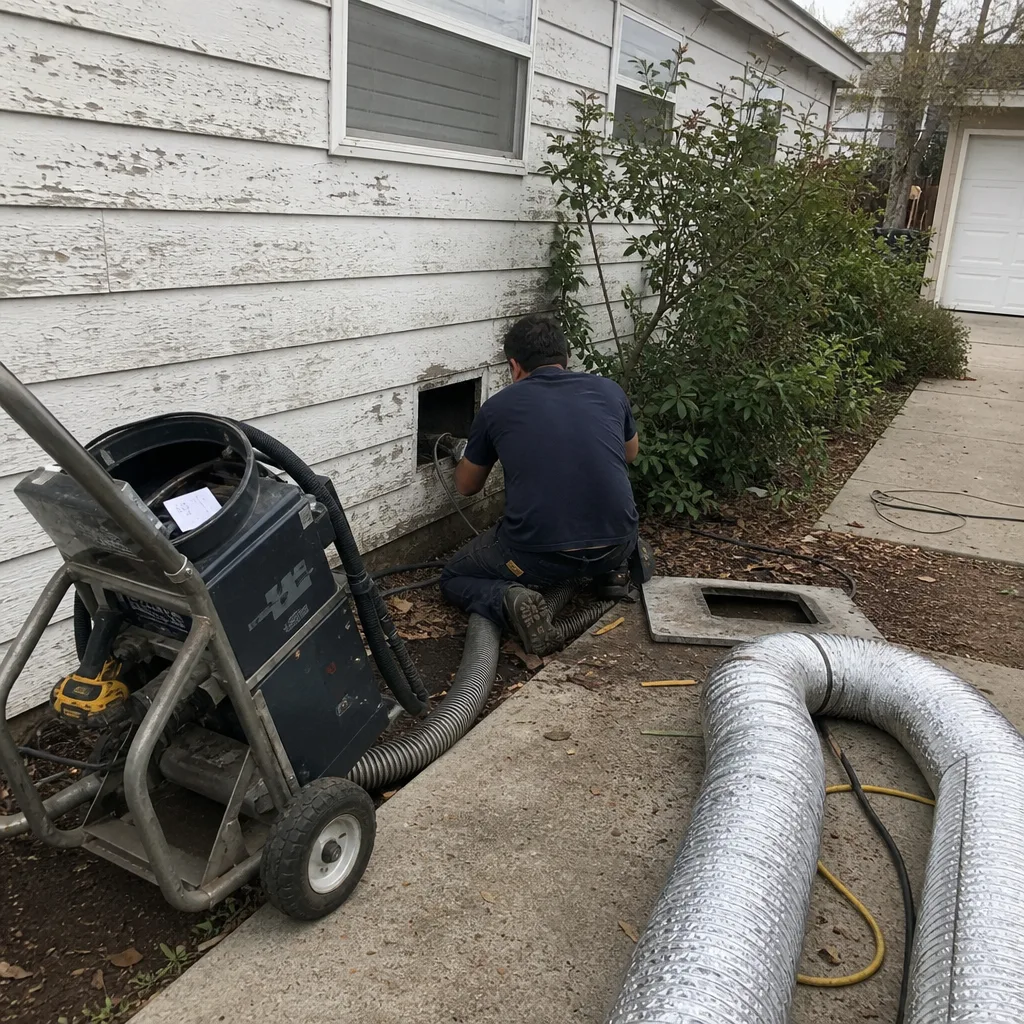 Before
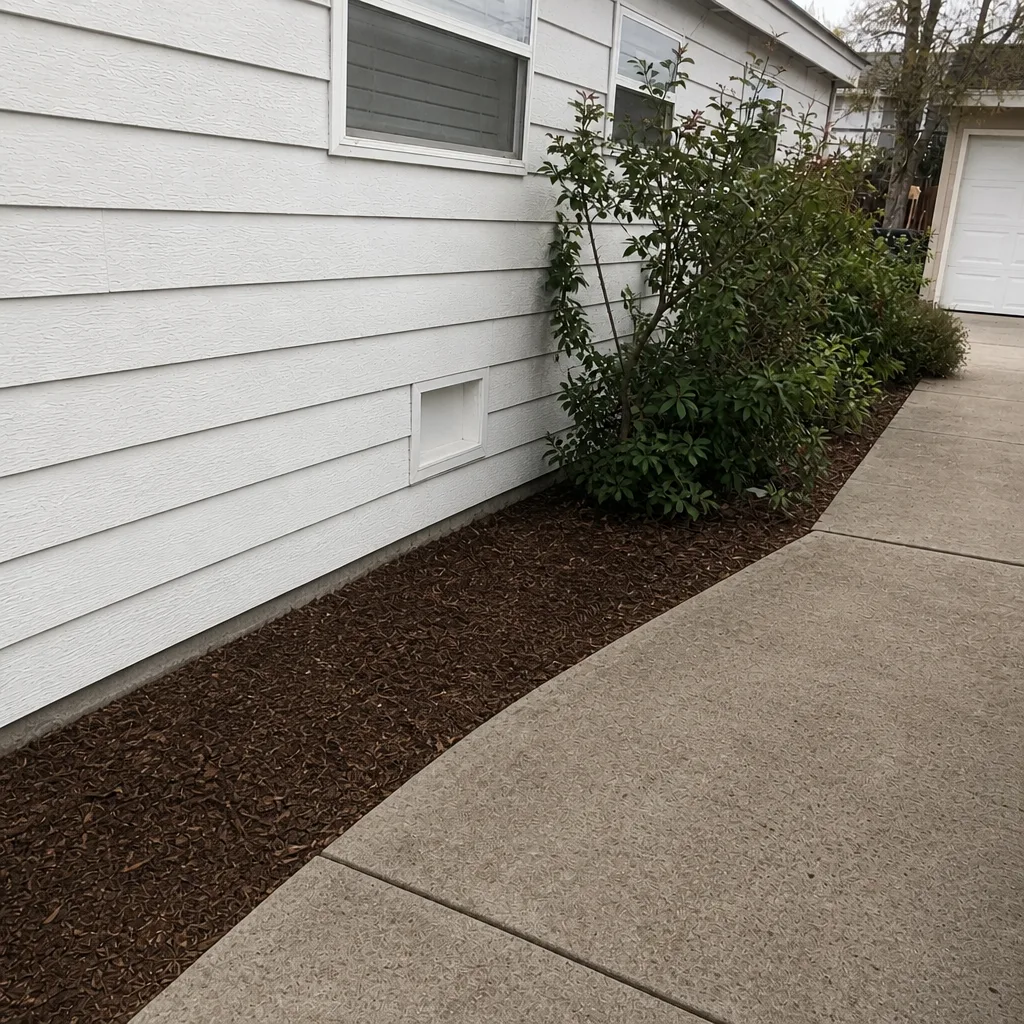 After
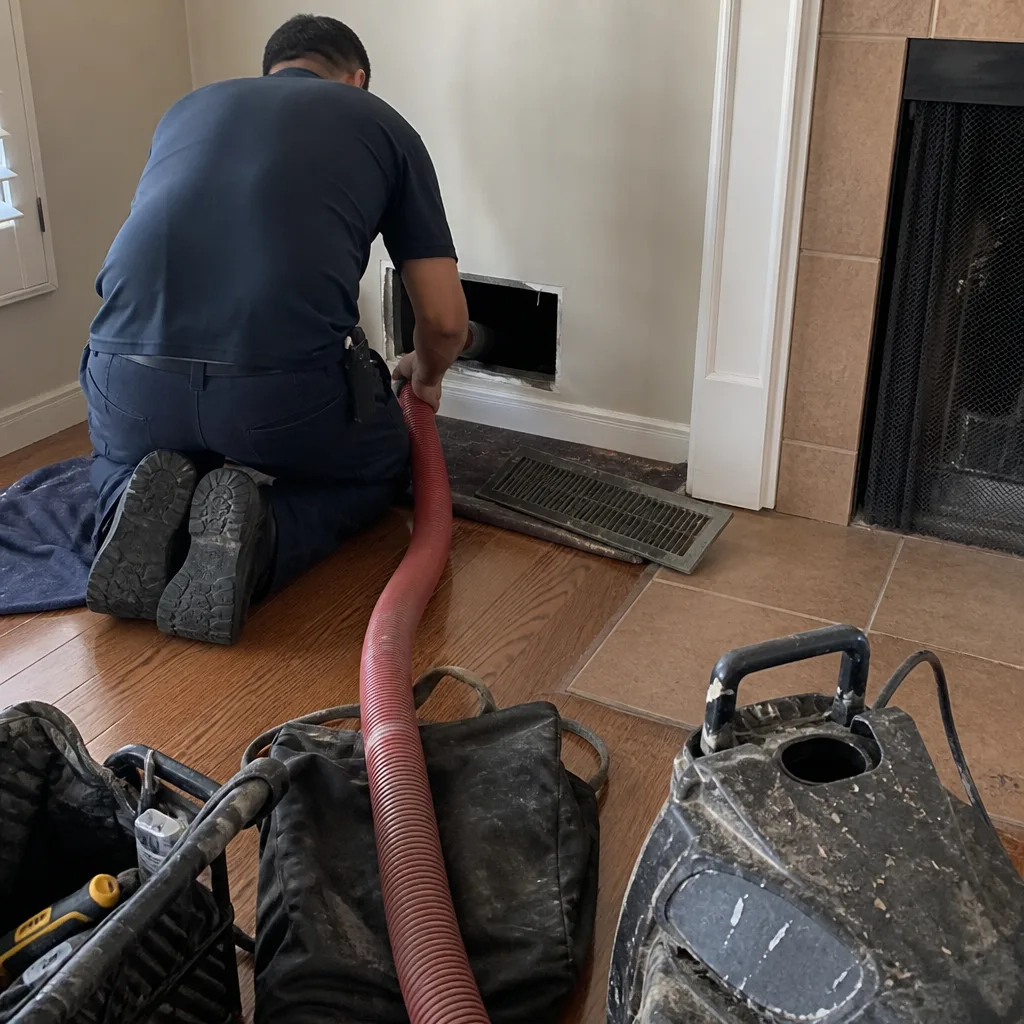 Before
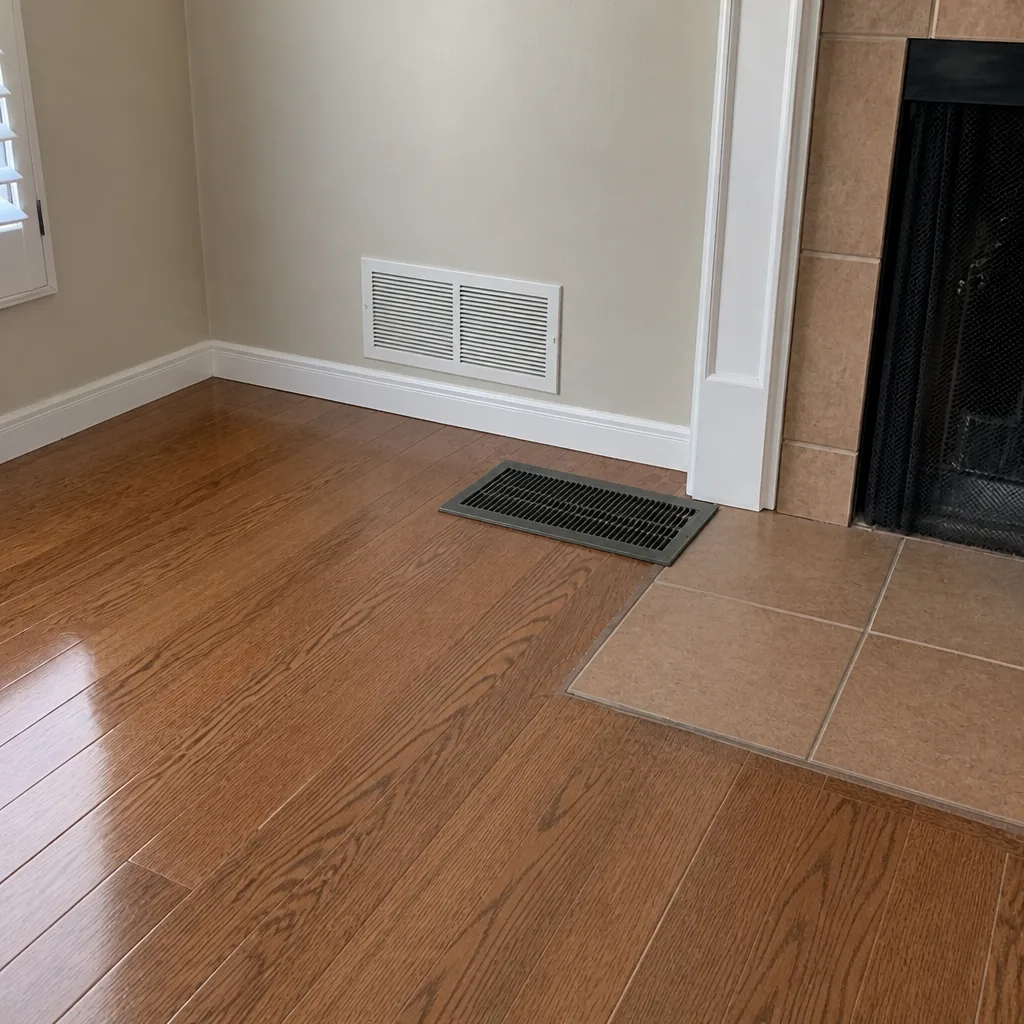 After
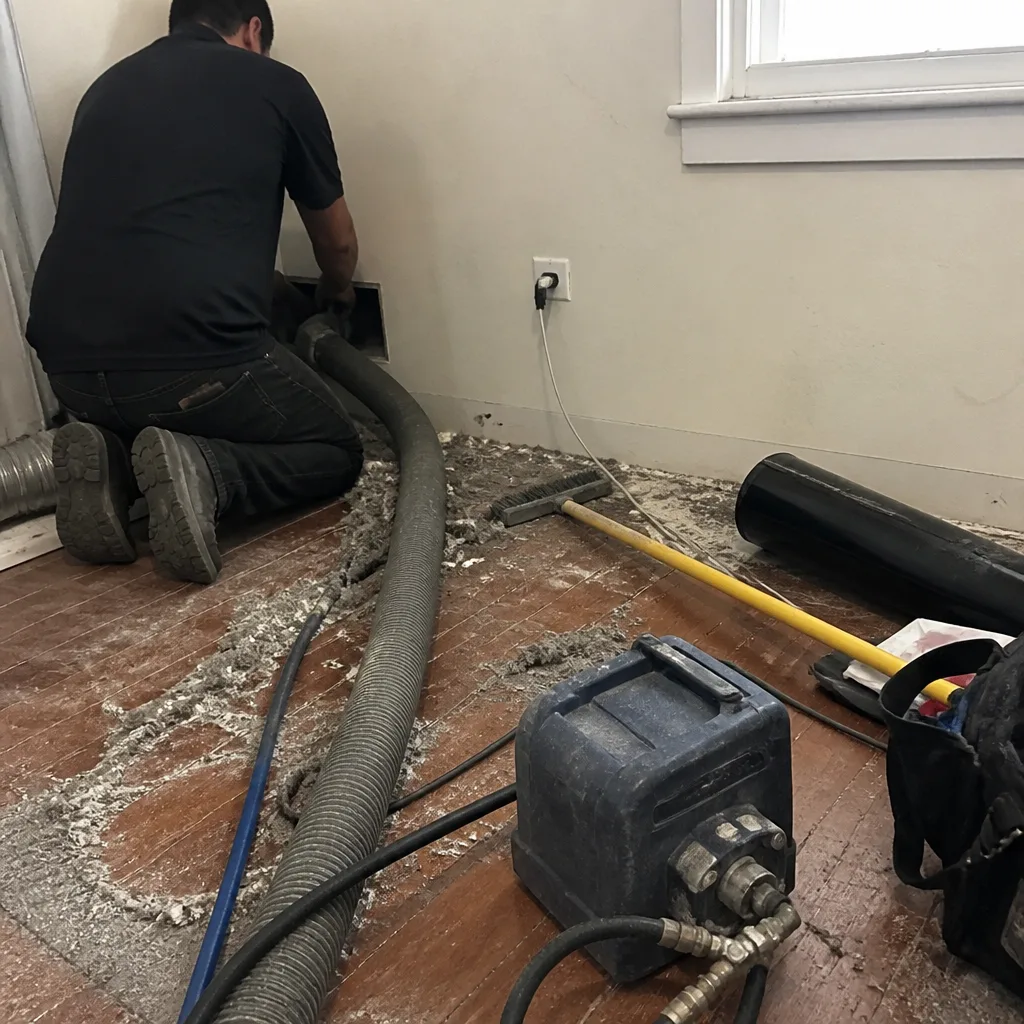 Before
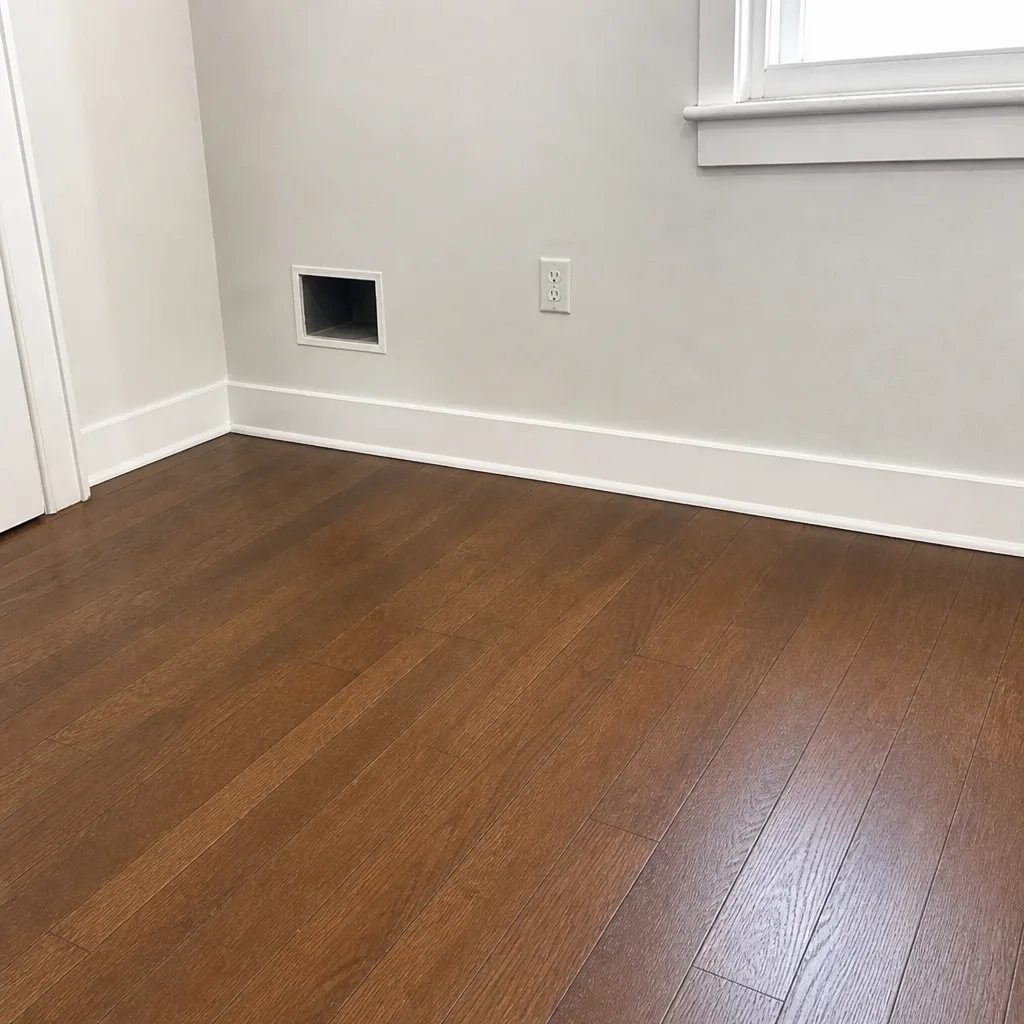 After